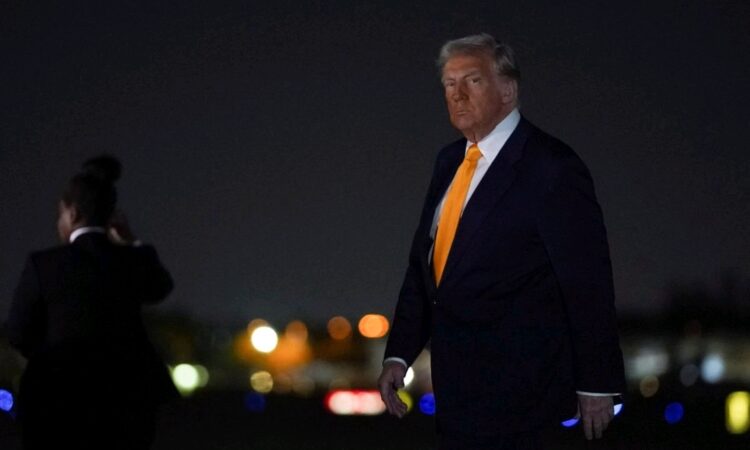
When I think about Donald Trump and the way he operates as president, one line always comes to mind: “Nice little country you’ve got there. It’d be a shame if something happened to it.” That’s the energy he brings to the job. It’s not the language of leadership or public service. It’s the language of intimidation.
Trump behaves less like a democratic leader and more like a mob boss. He threatens people, pressures them, rewards loyalty, and punishes disobedience. Justice only seems to matter when it benefits him. If it doesn’t, too bad. That’s the deal. You’re either with him, or you’re a target.
Inside the MAGA world, this kind of behavior is often praised as strength. Supporters see it as toughness, dominance, and fearlessness. To everyone else, it looks crude, cruel, and dangerous. But no matter how you label it, the style feels pulled straight from organized crime. It’s governance by menace.
Anyone familiar with The Sopranos can spot the similarities immediately. Trump’s White House often feels less like a government and more like a crew, operating on loyalty tests, grudges, and power plays. The comparison isn’t subtle. In fact, the parallels are hard to ignore.
Loyalty matters more than ability. In Tony Soprano’s world, competence comes second. What matters most is whether you back the boss, especially when he’s wrong. Trump works the same way. Expertise, experience, and qualifications don’t protect you. Loyalty does. And if you show even a hint of disloyalty, you’re out, publicly humiliated, or quietly frozen out.
Family and brand override institutions. Tony’s crime family comes before everything, including the law. Trump has blurred the line between government and personal empire so completely that it’s hard to tell where one ends and the other begins. Family members, longtime loyalists, and brand defenders matter more than rules, norms, or democratic guardrails.
Both men project confidence while obsessing over every insult. Tony explodes in private. Trump does it in public, often online. Different outlets, same obsession. Respect is everything. Any criticism becomes proof of persecution. Investigations are witch hunts. Losses are rigged. Accountability is abuse. The boss is always the real victim.
Silence and stonewalling replace transparency. In the mob, you don’t talk, especially to outsiders or authorities. Trump’s inner circle treats the press, Congress, and investigators as enemies by default. Cooperation is weakness. Attacks and deflection are the strategy. Truth isn’t denied outright; it’s treated as irrelevant.
Official titles become cover stories. In organized crime, everyone has a legitimate job on paper. In reality, their role is protecting the boss. Trump’s administration functions the same way. Many aides hold formal government positions while acting as enforcers, propagandists, or personal defenders whose real job is shielding Trump from consequences.
Threats are deliberately vague but very real. Neither Tony nor Trump needs to spell things out. The implication is enough. Talk of investigations, prosecutions, or retaliation hangs in the air just long enough to make people nervous. The goal is fear without fingerprints, intimidation without accountability.
Enemies are everywhere. Tony sees betrayal around every corner. Trump frames critics as traitors, criminals, or enemies of the state. Democrats, journalists, judges, even Republicans who aren’t loyal enough become targets. Any institution that resists him is suddenly corrupt.
Chaos is a feature, not a bug. In mob crews, paranoia keeps everyone off balance. Trumpworld thrives on the same instability. Aides compete for approval, constantly signaling loyalty and watching their backs. Confusion becomes a tool. No one feels safe enough to push back.
Morality bends to convenience. In Tony’s world, it’s just business. For Trump, it’s just a deal. Principles exist only when they’re useful. Right and wrong shift depending on who benefits.
Retaliation is the point. Punishment isn’t just about discipline; it’s about sending a message. Trump and his allies often seek revenge openly, against critics, prosecutors, journalists, and former friends. Even symbolic punishment works as long as everyone understands the warning.
Strength must always be performed. Tony flaunts power through money, swagger, and dominance. Trump does it through rallies, social media, constant bravado, and refusing to admit mistakes. Losses are rebranded as wins. Weakness is unforgivable.
The damage left behind is always someone else’s problem. Institutions erode. Norms collapse. People get hurt. But the boss insists he’s the one who’s been wronged.
At its core, The Sopranos is a story about power without accountability pretending to be family. Trump’s movement is power without accountability pretending to be love from the masses.
There’s one crucial difference, though. The Sopranos had a moral anchor: Dr. Jennifer Melfi. She represented empathy, ethics, and an attempt to confront reality. She challenged Tony, even when it was uncomfortable. She tried to hold up a mirror.
Trump’s circle has no such figure. There is no trusted voice pushing back, no adult in the room insisting on truth, restraint, or accountability. That absence is one of the most dangerous aspects of his presidency.
When a fictional mob boss shows more self-awareness and moral tension than a real American president, something has gone deeply wrong.