Scientists claim they’ve finally solved the mystery of the Bermuda Triangle with shocking theory
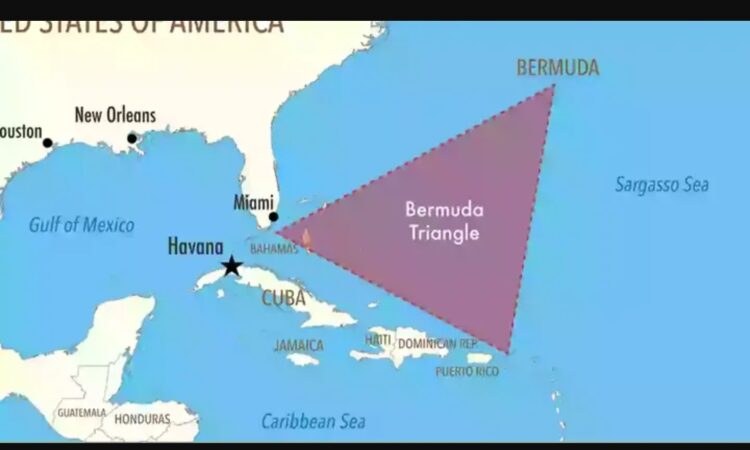
The Bermuda Triangle has long been a source of mystery and fear, with countless stories about ships and planes disappearing without explanation. For decades, people have speculated about supernatural forces, alien abductions, or strange magnetic fields pulling vessels off course. The area, located in the Atlantic Ocean between Florida, Puerto Rico, and Bermuda, has inspired books, movies, and even the popular TV series *Lost*.
However, scientists are now saying the real explanation may be far less mysterious than the legends suggest. Dr. Simon Boxall, an oceanographer from the University of Southampton, believes he has finally uncovered the truth behind many of these unexplained disappearances. According to him, the answer lies not in the supernatural, but in powerful natural phenomena known as rogue waves.
Rogue waves are massive, unpredictable waves that can reach up to 100 feet (30 meters) in height. They can appear suddenly and strike from unexpected directions, giving ships and planes little to no time to respond. Dr. Boxall explained that a vessel hit by one of these enormous waves could sink within just two or three minutes, leaving no chance to send a distress signal.
One of the most famous cases often linked to the Bermuda Triangle is the disappearance of the USS Cyclops in 1918. This massive coal-carrying ship was traveling from Salvador, Brazil, to Baltimore when it vanished without a trace, taking 306 crew members with it. No wreckage was ever found, and no distress call was made. Dr. Boxall believes this ship, like others that have disappeared in the area, may have been struck by a rogue wave powerful enough to tear it apart almost instantly.
He explained his theory further in the Channel 5 documentary series *The Bermuda Triangle Enigma*. There, he described how the region is particularly vulnerable to rogue waves because of its unique weather and ocean conditions. Storms often develop in the south and north of the area, and when they meet—especially with additional weather systems coming from Florida—they can create the perfect conditions for these massive waves to form.
To test his theory, Dr. Boxall even built a scale model of the USS Cyclops to simulate how such a wave could destroy a ship of its size. The results showed that a vessel could split in two under the immense pressure, making it impossible for the crew to react in time. This, he said, would explain the absence of distress signals from many lost ships and planes.
Not everyone agrees that the Bermuda Triangle is a uniquely dangerous place. The National Oceanographic and Atmospheric Administration (NOAA) states that the number of disappearances in the area is no greater than in any other heavily traveled part of the ocean. They do, however, acknowledge that natural factors—such as sudden weather changes, strong currents, and shallow waters around the Caribbean islands—can create dangerous conditions for navigation.
Dr. Boxall’s explanation challenges decades of myths about the Triangle being a supernatural hotspot. Instead, it paints a picture of a region where nature itself, through a mix of storms and unpredictable seas, poses the greatest threat. Many of the so-called mysteries may not be mysteries at all, but tragic accidents caused by the ocean’s raw power.