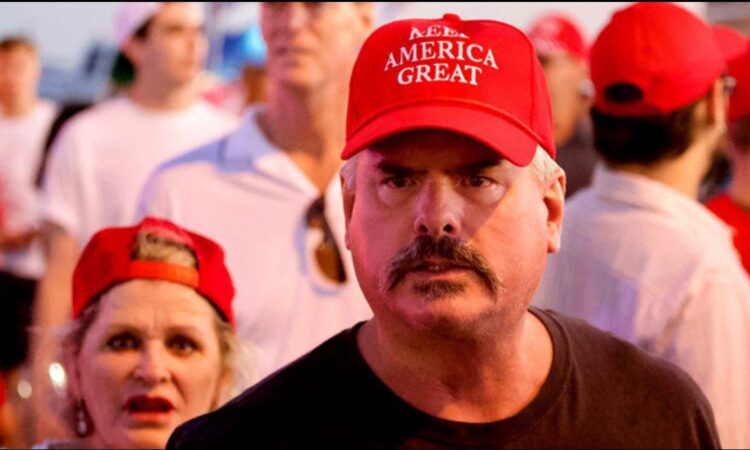
Donald Trump is beginning to face unexpected resistance from within his own populist base, as his enthusiastic embrace of artificial intelligence has sparked growing concern among key figures in the America First movement. According to new reporting from Politico, Trump’s recent efforts to position himself as a champion of AI innovation have opened a rift between him and parts of the MAGA coalition that have long harbored deep suspicions of Big Tech. This internal conflict could shape the direction of upcoming legislative debates over how the federal government approaches the rapidly evolving technology.
The Politico article, titled “Trump loves AI, and the MAGA world is getting worried,” describes how Trump’s AI agenda has triggered backlash from some of his most vocal allies. While the former president is pushing for policies that would accelerate AI development—working closely with tech industry leaders to do so—many of his supporters view such partnerships with Silicon Valley elites as a betrayal of the populist, anti-establishment values that originally fueled the MAGA movement.
The article points out a critical tension within the Republican Party’s current makeup. On one side is Trump, who sees AI as a strategic asset and economic engine, and who appears willing to work hand-in-glove with powerful corporate interests to lead on the issue. On the other side are many rank-and-file conservatives, along with some influential figures on the right, who remain deeply distrustful of Big Tech and fear the societal consequences of unrestrained AI expansion.
Among the most vocal critics is Rep. Marjorie Taylor Greene, who took to social media to express her alarm over the potential for AI to displace human workers on a massive scale. She also warned that the large data centers required for AI could have severe environmental effects, particularly on water supplies and energy consumption. Her comments signal a broader concern that AI development might come at a steep cost to ordinary Americans—economically, environmentally, and culturally.
Former White House chief strategist Steve Bannon also weighed in, comparing the pursuit of AI superintelligence to “summoning the demon.” His remarks echo a sentiment that’s becoming increasingly common in nationalist and populist circles: that AI may ultimately serve the interests of an elite class, rather than the broader public. In the days following Trump’s AI policy announcements, a number of populist-aligned think tanks and right-wing media outlets ramped up their criticisms, warning that the government’s approach risks undermining the very people the America First movement claims to represent.
Adding to this chorus of concern, Senator Josh Hawley offered sharp criticism of AI during a speech at the National Conservatism conference in Washington this September. Hawley framed the technology as a step toward “transhumanism”—a vision of the future in which humans are increasingly integrated with machines. He argued that this path conflicts with both Christian values and the interests of working-class Americans, while serving to empower a wealthy, technocratic elite.
Taken together, these reactions illustrate a growing ideological divide within Trump’s political base. While the former president continues to position himself as a forward-looking leader on technological innovation, many of his most devoted followers are expressing unease—if not outright hostility—toward what they see as a dangerous alliance with the very tech industry figures they believe are undermining American sovereignty, cultural values, and economic stability.
This emerging fracture could have significant implications as AI continues to dominate policy discussions in Washington. With Trump likely to make AI a key talking point in his campaign and future policy proposals, he may find himself navigating not just opposition from Democrats, but also dissent from within the ranks of his own movement.