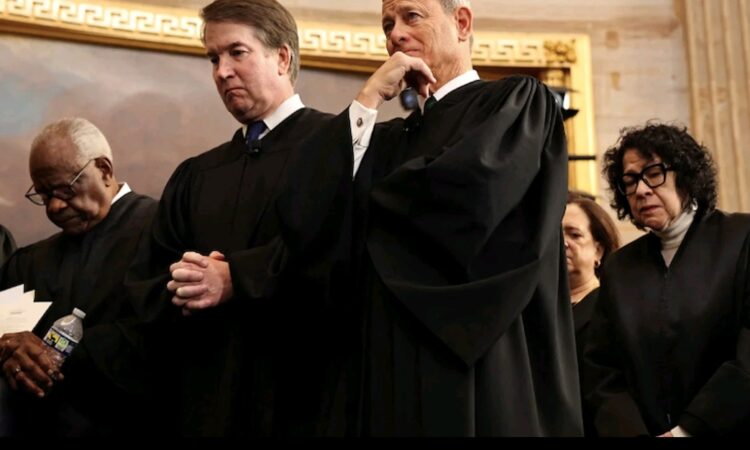
The U.S. Supreme Court is about to hear Louisiana v. Callais, a major case that could weaken one of the last key protections against racial discrimination in voting. The hearing, set for Wednesday, is unusual because it’s a re-argument meaning the Court decided to reopen the case after already hearing it once. The issue centers on Section 2 of the Voting Rights Act, a law that stops states from using voting maps or rules that lessen the political power of minority voters.
According to political strategist Max Flugrath, writing for Slate Magazine, the decision to rehear the case suggests the Court’s conservative majority might be preparing to strike down or greatly weaken Section 2. He warns that if this happens, it would give the Trump-aligned political movement a strong advantage in future elections by removing a major barrier against racially biased districting.
Flugrath argues that without Section 2, Republican-controlled legislatures could use gerrymandering — the practice of drawing political maps to favor one party — to lock in long-term dominance in the U.S. House of Representatives. Analyses by Fair Fight Action and the Black Voters Matter Fund estimate that the GOP could gain as many as 27 additional safe House seats, 19 of them directly tied to the loss of Section 2 protections.
The Louisiana case started when a court found that the state’s congressional map unfairly reduced the voting influence of Black residents and ordered lawmakers to create a second majority-Black district. Lawmakers complied, but then a group of white voters sued, claiming the new map discriminated against them because it considered race in its design.
Flugrath called this argument a distortion of the Constitution’s purpose — twisting civil rights protections into tools for maintaining racial inequality. He noted that while some lower courts accepted that argument, Louisiana’s Republican leaders pushed for a full Supreme Court review. After the justices agreed to rehear the case, those same officials changed positions and urged the Court to strike down Section 2 altogether.
Justice Clarence Thomas’ comments suggest he sees any race-based districting as unconstitutional, even when it’s meant to fix proven racial discrimination. Justice Brett Kavanaugh has also implied that race-conscious protections like Section 2 shouldn’t last forever. Together, those views suggest a willingness to end one of the most important civil rights tools in modern American law.
If the Court sides with the challengers, Flugrath warns, politicians who design maps that weaken minority voting power could defend their actions by claiming that fixing racial discrimination is itself a form of discrimination. That logic could make it almost impossible to challenge unfair maps at any level — from Congress to local school boards.
Flugrath describes this as a dangerous and Orwellian reversal of reality, one that could bring the U.S. back to a version of the Jim Crow era, when racial inequality in voting was widespread but disguised under the law.
He concludes that fair voting maps, free elections, and equal representation are still the best tools Americans have to resist the growing threat of authoritarianism — but only if people are willing to use them.