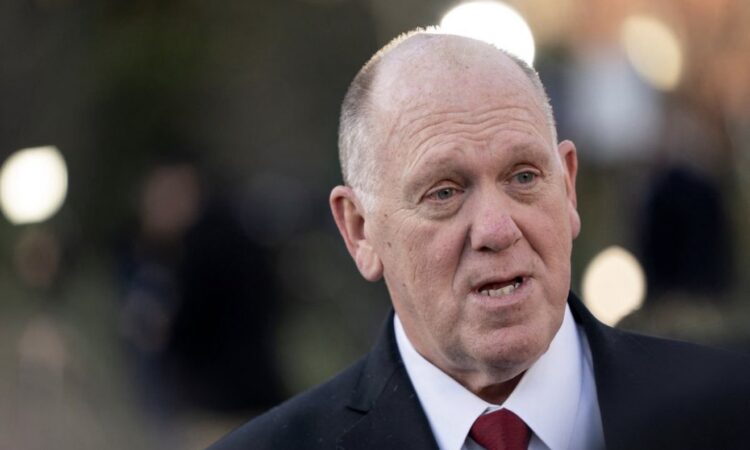
When Tom Homan, President Donald Trump’s top adviser on border and immigration issues, spoke to reporters about stepping in to handle the worsening situation in Minneapolis, he tried to walk a fine line.
On one hand, he suggested that federal authorities might be willing to scale back their presence if city and state officials agree to cooperate with the administration. On the other hand, he made it very clear that the White House does not see itself as backing down or giving in, especially to protesters who oppose Immigration and Customs Enforcement. His message was that cooperation could lead to fewer agents on the ground, but resistance would not force the administration to retreat.
That careful balance, however, didn’t ease concerns among Democrats. One moment from the press conference in particular raised alarm bells. Speaking later on MSNBC’s Morning Joe, journalist Jonathan Lemire said that several Democratic lawmakers had contacted him privately to express how unsettled they were by what they heard. Their concern wasn’t just about policy, but about the tone and implications of Homan’s remarks.
Lemire explained that during the briefing, Homan was asked a pointed question by a reporter about whether federal authorities were monitoring protesters who may be using encrypted messaging apps like WhatsApp or Signal. The question focused on whether activists were organizing through these platforms to watch, interfere with, or document ICE operations. Homan’s response was blunt. He said that authorities were indeed keeping an eye on such activity and then added a short but loaded warning, saying that “justice is coming.”
That phrase, according to Lemire and the Democrats who contacted him, was deeply unsettling. To them, it sounded less like a narrow law-enforcement statement and more like a broad warning aimed at people who oppose the administration’s immigration agenda.
The fear is that the government could use surveillance or legal pressure not just against individuals committing crimes, but against protest groups, advocacy organizations, or left-leaning movements simply because they are critical of ICE or federal policy.
There has already been anxiety among civil rights advocates that this administration might blur the line between enforcing the law and punishing dissent. Comments like Homan’s, especially without clear explanation, add to that worry. Critics argue that monitoring private communications and issuing vague threats about “justice” risks intimidating people who are exercising their right to protest or organize politically.
Homan did not spell out exactly what actions he was referring to, leaving room for speculation and concern. Because of that lack of clarity, Democrats and civil liberties groups say they will be watching closely in the coming days and weeks to see whether the administration follows through with arrests, investigations, or other crackdowns targeting activists rather than focusing strictly on criminal conduct. The uncertainty itself, they argue, is part of the problem, as it creates fear about how far the federal government is willing to go in response to opposition.