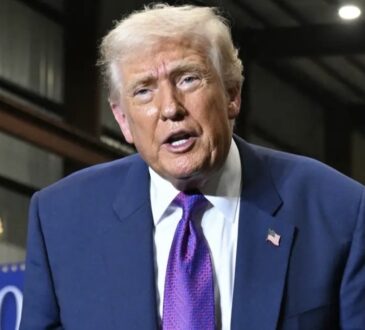
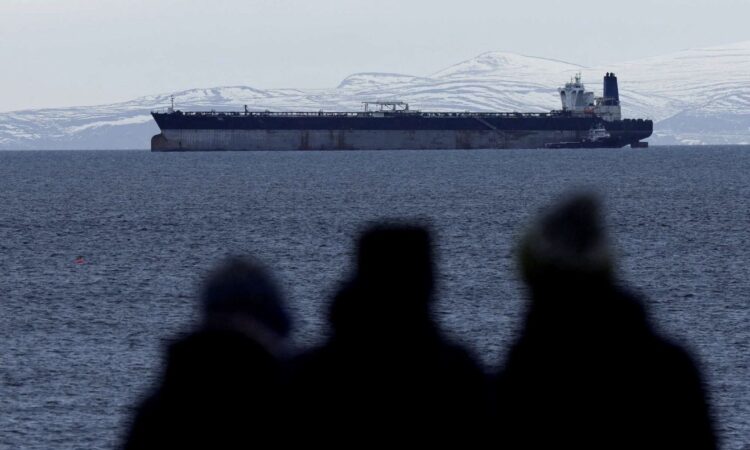
A Scottish lawmaker has launched a furious attack on Donald Trump, accusing the U.S. president of violating Scotland’s sovereignty after American forces seized an oil tanker and removed its senior crew members from waters between Iceland and Scotland earlier this month.
Speaking in the Scottish Parliament on Wednesday, Ross Greer, a member of the Scottish Parliament and co-leader of the Scottish Green Party, said two men had effectively been taken from Scotland against the will of its courts. He identified them as tanker captain Avtandil Kalandadze and his first officer, whose name has not been made public. Greer said the men were “abducted from Scotland in the middle of the night by the U.S. military,” despite Scotland’s highest court ruling that they should remain under Scottish jurisdiction.
According to reporting by The National, Kalandadze, a Georgian national, and his colleague were removed from UK territory earlier this week by the United States Coast Guard, even though a court had explicitly ordered that they not be taken out of Scotland’s legal authority. The move has sparked outrage among Scottish politicians and legal figures, who say it represents a direct challenge to the rule of law.
Greer did not mince words in his condemnation of Trump. Addressing Parliament, he described the U.S. president as “not our ally” and went further, calling him a fascist. He said Scotland’s sovereignty had been breached, its courts ignored, and its authority overridden by a foreign military acting on Trump’s orders. In his view, the incident amounted to nothing less than a violation of Scottish territory and legal independence.
He urged the Scottish government to respond decisively, calling for U.S. troops to be expelled from Prestwick Airport, which is frequently used by American military forces as a transit hub. Greer argued that allowing U.S. forces continued access to Scottish facilities after such an incident would send the wrong message. He challenged Scotland’s leadership directly, asking whether the first minister would show Trump that what he described as “piracy” would have real consequences.
The BBC reported that the Trump administration has said it intends to prosecute Kalandadze and his first officer for allegedly breaching U.S. sanctions. That announcement has done little to ease concerns in Scotland, where officials argue that any legal process should have respected Scottish courts and jurisdiction before any removal took place.
Scotland’s justice secretary, Angela Constance, said the way the U.S. handled the seizure of the vessel and the removal of its crew showed a clear lack of respect for Scotland’s legal system. She said the Scottish government has serious questions and deep concerns about how the situation unfolded, stressing that the issue goes to the heart of public trust and confidence in the rule of law.
Constance said Scotland wants to play a responsible role in international justice, but that cooperation must be built on mutual respect. She emphasized that this begins with recognising Scottish jurisdiction and Scottish law, something she suggested the Trump administration failed to do.
Legal criticism has been even sharper. Aamer Anwar, who represents Kalandadze’s wife in a legal challenge over the incident, said the captain was “whisked away under the cover of darkness” by U.S. forces. He said it remains unclear what role, if any, the UK or Scottish governments played in allowing the transfer to happen.
Anwar warned that the episode sets a dangerous precedent, arguing that the United States should not have the power to arrest and remove people who are under Scottish legal control. He said the two men were denied their most basic human rights in full view of authorities, and alleged that the UK knowingly assisted the U.S. in removing them from Scotland in order to prevent a judicial review from taking place.
The incident has triggered growing anger in Scotland and raised serious questions about sovereignty, international law, and the balance of power between allies. For critics of Trump, it is yet another example of what they see as his willingness to ignore legal norms and diplomatic boundaries. For Scottish officials and lawyers, it has become a test of whether Scotland’s courts and laws will be respected when they clash with the interests of a powerful foreign government.