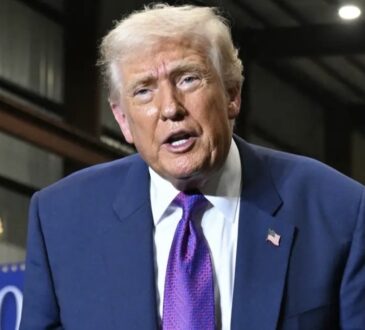
Right now, some of the loudest voices on the far right are openly talking about violence against liberals and anyone they see as part of “the left.” Instead of trying to calm things down, Donald Trump just went on Fox News and seemed to give those people a green light.
When asked about political violence, Trump said something that many experts and observers found disturbing. He argued that right-wing radicals are not the real problem, because in his words, they’re only reacting to crime and chaos. He then flat-out declared that the true threat comes from the left. In short, he dismissed concerns about violence from his own side and said, “I couldn’t care less” about right-wing extremists, making it sound like their actions are justified.
This is a sharp break from how presidents have traditionally responded to political violence. Normally, whether Democrat or Republican, presidents make a point of condemning extremism from both sides and call for peace. Even if they don’t mean it, the ritual matters because it sets a national tone. Trump, however, has now abandoned even that basic expectation. By excusing the far right while demonizing the left, he is sending a very direct message to extremist groups that they are in the clear.
This happened at a tense moment. The killing of conservative activist Charlie Kirk has shaken many on the right. Without waiting for the facts about who was responsible or why, influential figures quickly began calling for retaliation. People like Matt Walsh and Libs of TikTok immediately framed the murder as proof that the left is waging war, with Walsh telling conservatives to “fight back” and Libs of TikTok declaring, “THIS IS WAR.” These cries for retribution started before much was even known about the suspect, a 22-year-old in Utah who wasn’t clearly tied to either political side.
Experts who track extremist activity warn that Trump’s words act like permission. Jared Holt, who studies online radicalization, called Trump’s Fox comments a “permission slip.” By brushing off right-wing extremism as nothing serious, Trump signals to mainstream audiences that violence on his side isn’t a big deal. At the same time, extremist groups themselves are likely to interpret his words as an endorsement, a message that their actions will be tolerated, or even supported, at the highest levels of power.
Trump’s prepared remarks after Kirk’s killing only reinforced this one-sided approach. Instead of condemning violence in general, he blamed the left’s rhetoric and promised to use the power of his administration to track down not only the assassin but also anyone who could be accused of contributing to the crime in any way. That included liberal organizations and individuals who had criticized Kirk in the past. This kind of framing—treating all left-leaning groups as part of a violent conspiracy—is unprecedented in modern American politics.
It fits a larger pattern. Trump allies like Stephen Miller have already labeled the entire Democratic Party a “domestic extremist organization.” Others in Trump’s orbit, including those positioned to influence law enforcement, have pushed the idea of using federal power to go after political opponents. This raises the concern that if Trump follows through, federal agencies like the FBI could be weaponized to target not terrorists or criminals, but broad swaths of American citizens based purely on ideology.
Meanwhile, the right has its own long record of political violence, from mass shootings inspired by racist conspiracy theories to the January 6th attack on the Capitol. The left, too, has its violent incidents, such as the shooting of Representative Steve Scalise and now the assassination of Kirk. But using these tragedies to keep score misses the bigger point. As analysts like Brian Beutler note, far-right institutions are uniquely aggressive about seizing these moments to justify attacks on innocent people who have nothing to do with the crimes. Trump’s words, by excusing his side and blaming only the left, supercharge that dangerous dynamic.
Political scientist Robert Pape explains why presidential words matter. He says that when leaders point fingers and blame the other side for violence, it makes the situation worse and raises the temperature across the country. For decades, presidents have tried to lower the heat by condemning violence on both sides. Trump, by contrast, is doing the opposite. He is excusing violence from his supporters and encouraging them to see themselves as soldiers in a political war.
The result is that, at a moment when emotions are already raw and some voices on the right are calling for civil conflict, Trump is effectively telling them to proceed. Instead of using his platform to calm things down, he is telling extremists that the state itself will back them. This is why many see his comments as so dangerous—not just as rhetoric, but as an invitation for violence with the weight of presidential power behind it.