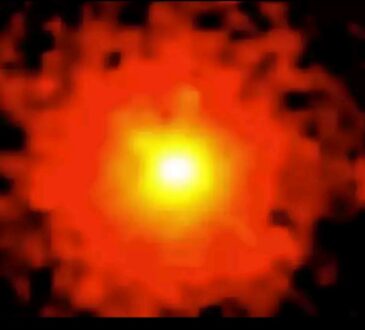
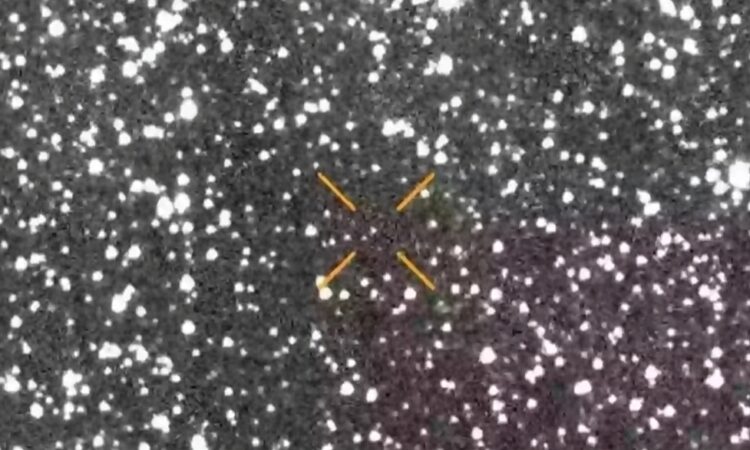
A Harvard scientist has raised serious concerns about a strange object from outside our solar system that is currently passing through. NASA has confirmed that the object, called 3I/ATLAS, did not come from our solar system.
It was first spotted on July 1 by a NASA-funded telescope in Rio Hurtado, Chile. Astronomers classified it as “interstellar” because its orbit follows a hyperbolic path — meaning it’s not trapped by the Sun’s gravity and is just passing through. NASA says it poses no danger to Earth, with its closest approach being about 170 million miles away.
Scientists worldwide are studying its size and physical features, but Harvard theoretical physicist Avi Loeb believes it might be an alien probe — and possibly not a friendly one. He says the object is larger than usual and doesn’t behave like a normal comet. Instead of having a glowing tail behind it, this object appears to have a light source in front of it.
Speaking to NewNation, Loeb urged world leaders to take UFOs and possible alien encounters more seriously. He believes we need an international organisation that can make global decisions in case humans ever face alien technology. He compared the situation to having an unexpected visitor in your backyard — you can’t decide how to respond without knowing the visitor’s intentions.
NASA says 3I/ATLAS will remain visible to telescopes until September, after which it will pass too close to the Sun to be seen. By early December, it should reappear on the other side of the Sun, giving scientists another chance to observe it before it continues its journey out of our solar system and into deep space, never to return.
Loeb warns that while people often discuss threats like climate change, artificial intelligence, and asteroid impacts, alien technology is rarely considered — but it should be. He says our response, if this is indeed an extraterrestrial object, should depend entirely on its purpose and behavior as it approaches.