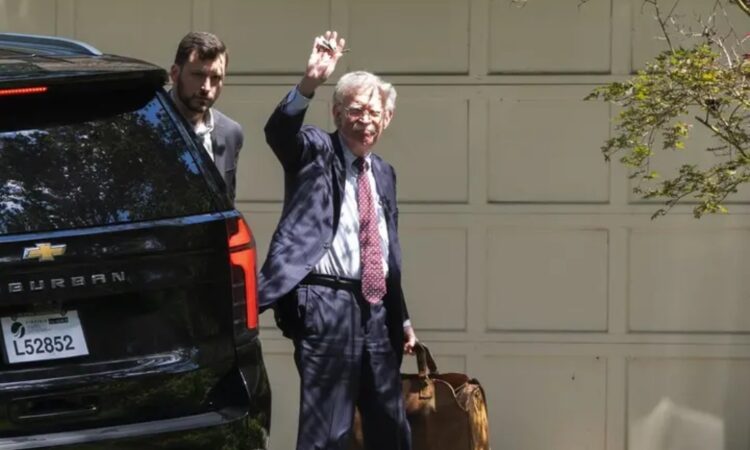
John Bolton, who once held a senior role in the Trump administration and later became one of its fiercest critics, is being accused of putting his personal gain ahead of the country’s security. He wrote a memoir, *“The Room Where It Happened,”* for which he reportedly received a \$2 million advance.
This book did more than just share behind-the-scenes stories or insider gossip — it contained details about highly sensitive Oval Office discussions and matters related to U.S. national security. These were topics that, under law and executive privilege, were supposed to remain confidential.
A federal judge, Royce Lamberth, addressed this issue back in June 2020. He warned that Bolton had “likely jeopardized national security” by releasing classified information and breaching his nondisclosure agreement.
The judge allowed the book to be published only because it was already too late to stop it — thousands of copies had already been shipped, and excerpts were widely circulating in the media. In his ruling, the judge stressed that Bolton had taken a huge risk with America’s security and that the government would probably succeed if it decided to prove in court that Bolton had broken the law.
People who worked with Bolton describe him as a volatile figure who often pushed for extreme measures such as airstrikes, regime changes, and military interventions when diplomacy might have been working. Rather than respecting the confidentiality expected from someone in his position, he filled his memoir with details based on notes he took while serving inside the White House.
These notes reportedly included secret discussions about how the United States might weaken Venezuelan leader Nicolás Maduro’s power and encourage military defections. Revealing such information could have offered a clear advantage to Maduro’s regime or other hostile foreign powers, and doing so without authorization can be a criminal act under U.S. law.
Bolton also included details about conversations between former President Donald Trump and Turkish President Recep Tayyip Erdoğan over the prosecution of Turkey’s state-owned Halkbank. This bank was accused of helping Iran bypass U.S. sanctions by secretly moving oil and gas revenues through front companies and falsifying records.
At the time Bolton published his book, this case was an ongoing criminal matter that eventually reached the Supreme Court. Sharing inside information about it risked undermining the case and potentially compromising sensitive evidence.
The memoir further revealed U.S. strategies and private consultations with North Korea’s Kim Jong-un, as well as confidential talks with South Korea. South Korean officials publicly criticized Bolton for betraying their trust, saying he disclosed sensitive information that should never have been made public.
Under U.S. law, sharing such intelligence — especially if it involves communications between allied nations — can be a serious offense. Bolton also exposed advice and concerns shared by key NATO allies such as Britain and France, damaging diplomatic relations and embarrassing partner governments. Foreign-government information is automatically classified under U.S. regulations, and leaking it can weaken alliances built on mutual trust.
Critics argue that Bolton’s claims did not expose any actual illegal actions by Trump or halt ongoing prosecutions, but his revelations still risked harming national security. They point out that his book created a blueprint of U.S. strategies, sensitive alliances, and negotiations that adversaries could study.
Supporters of legal action say this was not about whistleblowing or exposing corruption; it was about using classified materials to sell books and build a personal brand.
Former Trump allies, some of whom have faced their own legal challenges for protecting executive privilege, accuse Bolton of doing the opposite — of undermining it. They argue that while a president has the authority to declassify documents, advisers and cabinet members do not. Bolton, they claim, acted as if those rules did not apply to him.
The fallout from Bolton’s book has extended beyond legal debates. Allies have expressed frustration and a sense of betrayal, believing that sensitive information shared in trust was turned into a public spectacle.
The U.S. government views such actions as dangerous not only because they may reveal ongoing operations or diplomatic strategies, but also because they discourage open discussion within the administration. Officials may become less willing to share honest assessments if they believe those conversations could end up in a future memoir.
Those pushing for accountability argue that if investigators collect enough evidence and prosecutors decide to act, Bolton could one day face prison for mishandling classified materials.
They see his actions as a reckless gamble with America’s safety — not an act of public service, but a calculated decision to profit from inside information. If that happens, critics say, his legacy will not be defined by the book he published to great fanfare, but by the consequences he might face for revealing secrets that were never his to share.