
Man Tried to Take a Selfie With a Wild Elephant — Seconds Later, the Scene Turned Into a Terrifying Nightmare (Video)
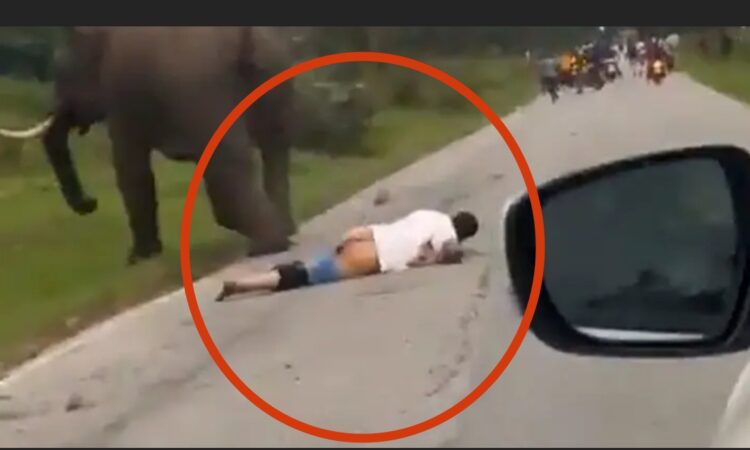
A tourist was badly injured after trying to take a selfie with a wild elephant. The man, identified as R. Basavaraju, had wandered into a restricted forest area near a temple on Sunday.
The elephant was calmly eating carrots by the roadside when Basavaraju got close to snap a picture. Witnesses say a sudden camera flash seemed to upset the animal, which then raised its trunk and charged at him.
Video filmed by other visitors shows the elephant running across the road, startling drivers, and chasing Basavaraju. In his panic to escape, he tripped and fell face-first on the road.
Within seconds, the elephant reached him and stomped on him several times. The attack was so forceful it tore off his trousers and underwear, leaving him partly exposed in front of stunned onlookers.
The elephant stood over him for a moment before calmly walking back into the forest, giving the injured man a chance to crawl to safety. Basavaraju survived but suffered serious injuries and was quickly taken to the hospital.
Forest authorities fined him 25,000 Rupees (about \$285) for trespassing and provoking wildlife. He was also required to make a video confession, admitting he didn’t know or follow the safety rules of the wildlife reserve.
Officials condemned his actions, saying they were reckless and dangerous, and stressed that wild animals should be observed from a safe distance.
India has more than 30,000 wild elephants — about 60% of the world’s Asian elephant population.
While elephants are generally peaceful, they can become aggressive if startled, threatened, or provoked. As tourism increases, so do incidents where humans ignore boundaries, leading to dangerous encounters.
This is not the first such attack. Last year, in Jaipur, a Russian tourist was thrown to the ground by an elephant named Gouri, which had previously injured a local shopkeeper.
Wildlife experts warn that close contact, provocation, and the use of animals for entertainment make such attacks more likely.
Basavaraju’s ordeal has reignited debate over whether provoking wild animals should be treated as a criminal offense.
Many are now calling for stricter penalties to deter tourists from risking both their own safety and the well-being of the animals just to capture a dramatic photo or video.