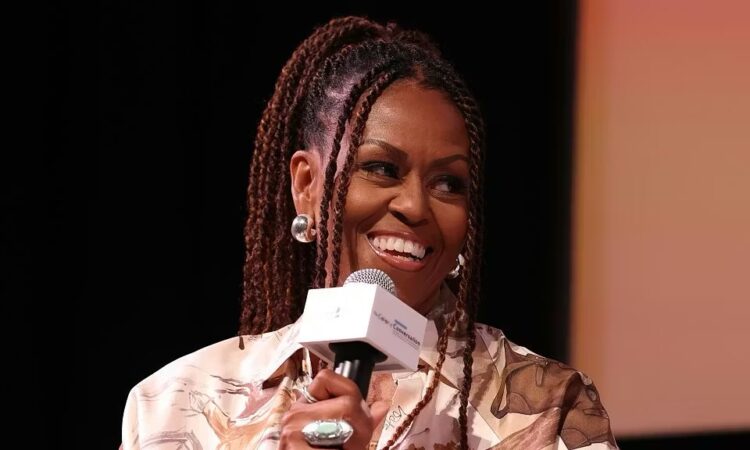
Michelle Obama has sparked a nationwide debate after suggesting that white beauty standards play a major role in why many Black people avoid swimming.
During a conversation with Tracee Ellis Ross while promoting her new book, she spoke openly about the pressure Black women face to keep their hair straight in order to fit into what she described as long-established white norms.
She explained that natural Black hair grows in curls and coils, and that many Black women feel they must straighten it to be accepted in workplaces and social settings. According to her, this pressure affects everyday life more than people realize.
She said this expectation is so strong that it often stops Black women from swimming, going to the gym, or doing anything that might ruin straightened hair. She described the straightening process as exhausting, expensive, and time-consuming, and said it traps women into avoiding water and physical activity just to maintain a look society demands.
She also questioned why the CROWN Act a law that protects people from hair discrimination is even necessary, stressing that something is clearly wrong if women must change their natural appearance to feel respected.
Her comments immediately went viral, drawing both praise and criticism. Supporters said she was spotlighting a real issue that many people never consider. They argued that hair is more than a style — it’s linked to identity, workplace treatment, and cultural acceptance. They also pointed out that many Black women have shared similar stories about avoiding pools or workouts because of hair maintenance pressures.
Critics, however, called her remarks an oversimplification. Some argued there are many reasons Black Americans have historically had lower swimming rates, including lack of access to pools, generational fear caused by discrimination, and financial barriers.
Others said linking it mainly to white beauty standards ignores deeper systemic issues. Conservative commentators accused her of blaming white people for personal choices, while others argued she was drawing attention to the wrong problems.
The debate grew even louder as columnists and social media users weighed in, with some saying Obama was right to challenge narrow beauty standards, and others insisting she exaggerated the link between hair and swimming.
Despite the backlash, her comments have reopened a long-standing conversation about discrimination, cultural expectations, and how something as simple as hair can influence health, recreation, and self-confidence.
For many people, the discussion is no longer just about swimming it’s about who gets to decide what is “acceptable,” and how those decisions affect everyday life for millions.