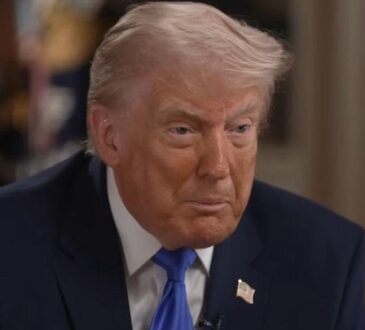
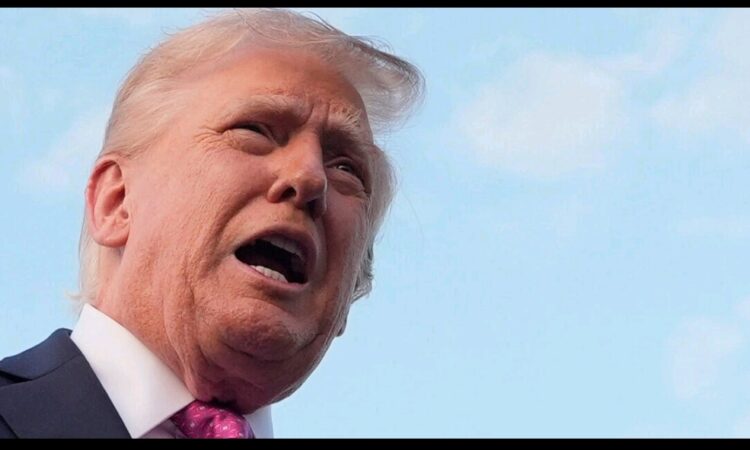
Donald Trump has been trying to place the blame for anger and violence in the country on Democrats and left-leaning groups, but his own words and behavior have given critics plenty of examples to use against him.
When conservative activist Charlie Kirk was murdered, Trump spoke out strongly, calling those who celebrated the killing “sick” and “deranged.” He went on to say the nation’s problems are entirely the fault of the left, accusing liberals of being agitators, disrespecting the country, and burning flags. He even suggested that foreigners who expressed joy at Kirk’s death should lose their visas. In that moment, Trump presented himself as someone deeply offended by violence and disrespect.
But his record shows a very different picture when the victims of violence have been Democrats. When Minnesota state representative Melissa Hortman and her husband were murdered by a gunman who had targeted other Democratic officials, Trump’s response was minimal. He made a quick social media post calling it a terrible shooting, but he did not lower flags to half-staff, he did not attend the funeral, and he refused to call Governor Tim Walz, who was also a Democrat and someone Trump had campaigned against. Trump brushed off the idea of reaching out, saying Walz was “a mess” and not worth his time. Similarly, when an arsonist set fire to the Pennsylvania governor’s mansion while Governor Josh Shapiro and his family were asleep inside, Trump said nothing publicly. Shapiro later shared that Trump eventually called him privately about a week later, but the contrast with the public gestures he made for Kirk was stark.
Trump has also shown a willingness to excuse or even celebrate violence when it benefits him politically. After the January 6th attack on the U.S. Capitol, in which his supporters beat police officers and threatened lawmakers, he eventually pardoned every one of them, including those convicted of violent crimes. For him, they were not criminals but “patriots” standing up for him. His rhetoric at rallies and online often adds fuel to the fire. He has mocked attacks on Democrats, such as the brutal hammer assault on Paul Pelosi, husband of then-Speaker Nancy Pelosi. Trump joked at events that the wall around Pelosi’s home hadn’t done its job, and he asked crowds how Paul was doing, prompting laughter. His son, Donald Trump Jr., also made fun of the assault on social media while Pelosi was still hospitalized. Senator Mike Lee went so far as to joke about Hortman’s murder while the suspect was still at large, even though police believed the gunman had a hit list of other Democrats.
In addition to these remarks, Trump has spread violent imagery online. He once reposted a picture of a pickup truck with an image of Joe Biden tied up in the back, suggesting violence against the sitting president. These are not isolated slips; they fit a pattern of Trump and his allies using humor, sarcasm, and online memes to make light of violence against their opponents while treating violence against conservatives as a national crisis.
This pattern has led critics to argue that Trump’s message is not really about rejecting violence at all, but about deciding whose suffering matters and whose does not. They say his words have emboldened his supporters to see violence against Democrats as acceptable, even worthy of celebration. His approach encourages a double standard where conservatives are portrayed as victims who deserve protection and honor, while liberals are dismissed, mocked, or even dehumanized when they face attacks. To many Americans, this behavior undermines his claim to care about unity or safety. Instead, it makes him appear as someone who tolerates and even foments political violence as long as it serves his own interests.
Critics stress that rejecting political violence cannot be selective. It requires leaders to speak out consistently, whether the victim is a friend or an enemy, and to set an example that violence has no place in democracy. Trump’s record, they argue, shows the opposite: he has excused, rewarded, and joked about violence against opponents, while demanding sympathy and justice only when his own side is attacked. For them, this selective outrage highlights not only hypocrisy but also the danger of having a leader who uses violence as a political weapon rather than condemning it outright.