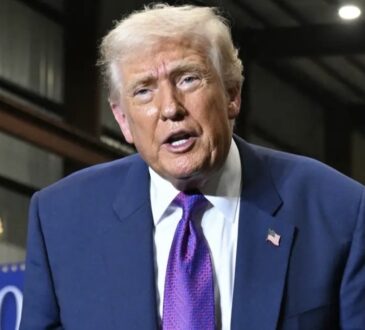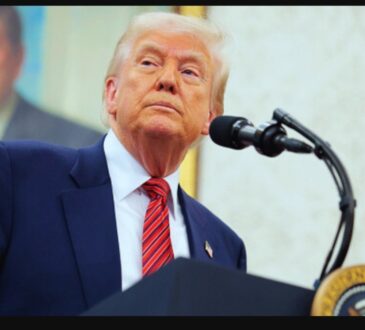
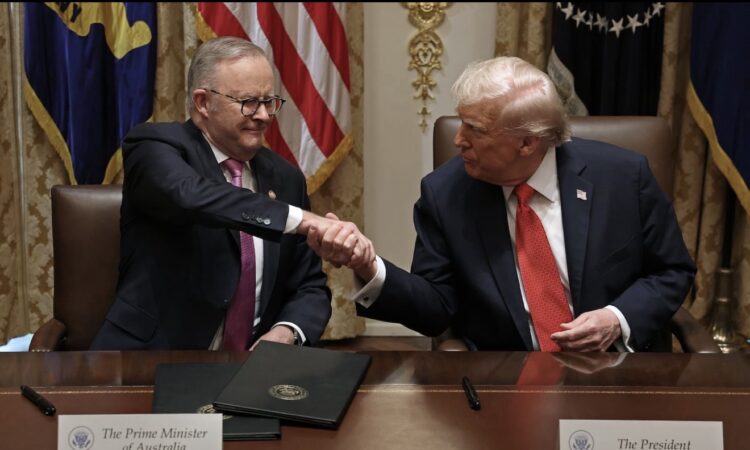
The moment between Donald Trump and Australia’s ambassador was tense and awkward, and it happened right inside the White House. During President Trump’s first official meeting with Australian Prime Minister Anthony Albanese, everything seemed to be going smoothly at first. The two leaders had just signed an $8.5 billion agreement on rare earth minerals, a deal aimed at strengthening both countries’ economic and strategic cooperation. Cameras flashed as they shook hands, smiling for the press. But things took a sudden and uncomfortable turn when Trump learned that one of Albanese’s top officials sitting across the table — Australia’s Ambassador to the United States, Kevin Rudd — had been very critical of him in the past.
Kevin Rudd, who once served as Australia’s prime minister, had a history of calling Trump names in public. Before taking up his ambassadorial role, Rudd had reportedly called Trump “nuts,” “the most destructive president in history,” “a traitor to the West,” and even “a village idiot.” These harsh words came back to haunt him when a journalist from Sky News Australia asked Trump directly whether he had any concerns about what Rudd had said.
At first, Trump tried to brush it off. “I don’t know anything about him,” he replied. “If he said something bad, maybe he’d like to apologize.” But curiosity quickly got the better of him. Turning toward Prime Minister Albanese, Trump asked in his usual blunt style, “Did an ambassador say something bad about me? Don’t tell me. Where is he? Is he still working for you?”
The question caught everyone off guard. Albanese, clearly uncomfortable but trying to keep the mood light, pointed across the table to Rudd, who nervously raised his hand. Trump locked eyes with him and asked, “Did you say bad?” The room fell silent. Rudd began to explain himself, starting with, “Before I took this position, Mr. President…” But before he could finish, Trump cut him off sharply, saying, “I don’t like you either, and I probably never will.”
The exchange left everyone in the room tense. What had started as a friendly diplomatic meeting turned into a public confrontation. Reports say Albanese tried to smooth things over afterward, but the incident quickly made headlines in both Washington and Canberra. Political analysts in Australia warned that this kind of tension could make future relations with the Trump administration difficult, especially since Australia plays a key role in the AUKUS security pact alongside the United States and the United Kingdom. The partnership is central to helping counter China’s growing influence in the Indo-Pacific region, including through plans to build a new fleet of nuclear-powered submarines with U.S. support.
Kevin Rudd’s position is now being closely watched back home. While his earlier remarks about Trump were made years ago, when he worked for an international think tank called the Asia Society, they are now raising questions about whether he can continue as ambassador under a president known for holding grudges. Trump has a history of clashing with diplomats who have criticized him. During his first term, for instance, Britain’s ambassador to the U.S., Kim Darroch, resigned after private diplomatic cables calling the Trump administration “inept” and “dysfunctional” were leaked. Trump publicly insulted Darroch, calling him “a fool,” and made it impossible for him to continue his role.
Some observers believe Rudd might face the same fate if Trump decides to take action. However, others argue that Trump has occasionally forgiven past critics when it suited him. One example is Vice President JD Vance, who once described Trump as “America’s Hitler” but later became one of his strongest allies.
Not everyone thinks Trump will act harshly. Democrat Congressman Joe Courtney, who co-chairs the Friends of Australia caucus in Congress, defended Rudd, praising him as a strong advocate for U.S.-Australia relations. Courtney said that Rudd’s work showed no political bias and that the new rare earth minerals deal was proof of his effectiveness in strengthening the alliance. “Ambassador Rudd shows no partisan bias in his work and that has not changed with the new administration,” Courtney told the Daily Beast.
Interestingly, this isn’t the first time Trump has mentioned Rudd. Last year, during an interview with British broadcaster Nigel Farage on GB News, Farage brought up Rudd’s past comments about Trump. Trump’s response was dismissive but telling. “He won’t be there long then, if that’s the case,” Trump said at the time. “I heard he was a little bit nasty. I hear he’s not the brightest bulb. But if he’s at all hostile, he will not be there long.”
The White House has not commented on the matter, and the Australian Embassy has not issued a statement yet. Still, this brief but fiery exchange has stirred diplomatic circles in both countries. It serves as a reminder that Trump’s meetings, even with allies, can turn unpredictable in an instant. What began as a day to celebrate a major trade deal ended up making headlines for all the wrong reasons — an awkward clash between a world leader and a diplomat who once called him names, right in front of cameras and fellow officials.