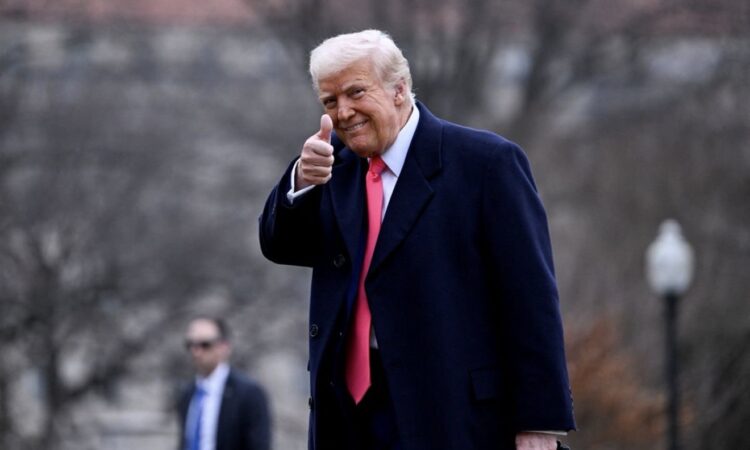
President Donald Trump’s administration has filed an “emergency” appeal to the U.S. Supreme Court in an attempt to remove Shira Perlmutter, the Register of Copyrights at the Library of Congress. The move comes after lower courts blocked Trump’s earlier effort to fire her, saying he does not have that authority since the Copyright Office operates under Congress, not the executive branch.
The dispute began in May, when Trump abruptly tried to dismiss Perlmutter following her release of a draft report titled “Copyright and Artificial Intelligence.” The report warned that many AI companies — including those owned or backed by Trump’s billionaire allies — might be violating copyright laws by using protected materials to train their AI models.
In September, the U.S. Court of Appeals for the D.C. Circuit ruled against Trump, stating that only Congress, not the president, has the power to remove the Register of Copyrights. Despite this ruling, Trump’s team quickly filed an emergency petition to the Supreme Court, arguing that Perlmutter’s actions interfered with the administration’s AI innovation agenda.
The controversy began after Perlmutter refused to endorse proposals from several major AI companies that wanted broad permission to use copyrighted works for model training. Her office’s report stated that this type of mass data copying “threatens significant potential harm to the market value of copyrighted works.” It also warned that AI-generated content could replace or weaken demand for original creations.
The report noted that if an AI model produces material that’s too similar to an artist’s original work, it could result in “lost sales” and “dilution of creative markets,” even if the AI output doesn’t directly copy any one piece.
Critics saw Trump’s effort to fire Perlmutter as politically motivated. Representative Joe Morelle of New York condemned the move, calling it “a brazen, unprecedented power grab with no legal basis.” He added that it was “surely no coincidence” that Trump acted just one day after Perlmutter refused to approve Elon Musk’s request to use copyrighted material for AI training.
Musk, one of Trump’s most prominent supporters in the tech world, has previously argued that intellectual property laws should be repealed entirely, claiming they slow innovation.
The conflict comes amid Trump’s renewed push to align his administration closely with powerful figures in the tech industry. In September, he hosted a private dinner with 33 executives from leading AI companies, signaling his intent to expand U.S. dominance in artificial intelligence — even as critics accuse him of putting corporate interests ahead of the law.
The Supreme Court has not yet indicated whether it will hear the administration’s emergency plea. If accepted, the case could set a major precedent for how much control a president has over congressional agencies and could reshape the balance of power between government branches in regulating technology and copyright law.